How Oregon’s Rainy Climate Quietly Destroys Crawl Space Wood Season by Season
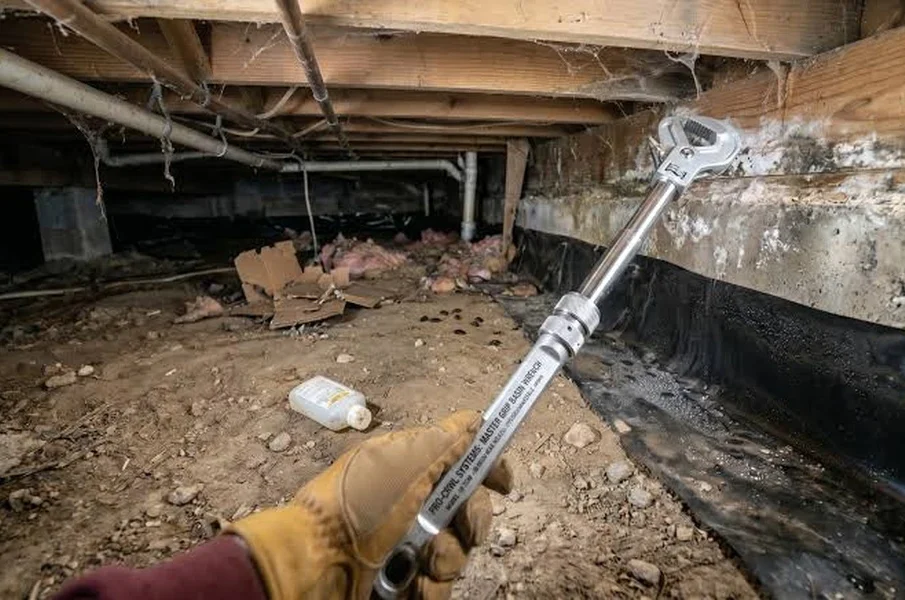
Most homeowners look at Oregon rain and think roof, gutters, maybe a leaky window. Almost nobody looks down. But the part of your house most exposed to years of Pacific Northwest moisture isn’t the siding or the attic. It’s the wood sitting six inches above bare soil in your crawl space, and it’s been taking a beating every single season.
The damage isn’t dramatic. That’s the problem. Wood rot and structural decay build quietly across months, then years, then suddenly you’re getting a repair estimate that makes your stomach drop. Understanding how your climate works against that wood, season by season, gives you a real shot at stopping it before the framing softens past the point of a simple fix.
Oregon Precipitation: The Numbers Behind the Problem
Oregon isn’t uniformly wet, but the areas where most people live are relentlessly so. According to the 2022 NOAA State Climate Summaries, statewide annual precipitation has ranged up to about 49 inches in the wettest years, and portions of the Coast Range receive more than 100 inches annually. The Willamette Valley, home to Portland, Salem, and Eugene, sits comfortably in the middle of that range, meaning soil stays saturated for months at a stretch.
That saturation is the crawl space’s real enemy. Wet soil releases water vapor constantly. It rises through the ground, hits the cooler wood framing above it, and condenses. Do that for six straight months and you don’t have a moisture problem. You have a wood rot problem.
The Seasonal Decay Index: How Each Season Contributes
Think of crawl space wood decay as a four-chapter story. Each season writes a different page, and the damage compounds across all of them. I call this the Seasonal Decay Index, a way of mapping which type of damage dominates each quarter and what it sets up for the next one.
Fall: Saturation Begins
October is when Oregon’s dry spell ends and soil saturation kicks back in hard. Ground vapor production spikes. Vapor barriers installed years ago, especially older polyethylene sheeting, start to fail at the seams and gaps. Once vapor gets through, it hits the underside of your floor joists, and because fall air is cooling fast, condensation forms on those wood surfaces nightly.
This is also when passive foundation vents, the kind built into homes constructed before 2000, start actively working against you. Outside air in fall is often more humid than the air trapped inside the crawl space. Opening those vents in fall doesn’t dry your crawl space. It floods it with a second moisture source on top of what the ground is already pumping in. Most homeowners assume vents help. In the Pacific Northwest, they frequently make things worse by October.
Winter: Fungal Growth Takes Hold
By January, humidity levels inside an unencapsulated Oregon crawl space often stay above 70 percent for weeks at a time. Wood doesn’t rot from liquid water alone. It rots when wood moisture content climbs above roughly 19 percent and stays there. Winter keeps it there.
This is when fungal spores, which are always present in soil, find conditions they love. Brown rot and white rot fungi colonize the cell structure of your floor joists and sill plates. They don’t look dramatic at first. A little discoloration, a faint musty smell that you might write off as “old house.” But the structural integrity of that wood is already declining.
The air quality consequence matters too. Research published in the Building Performance Association Journal found that roughly 40% of the air in homes with vented crawl spaces originated in the crawl space itself, pulled upward by the stack effect. That means every musty, spore-laden cubic foot of crawl space air is cycling through your living rooms all winter.
Spring: The Deceptive Dry Spell
Spring is the most dangerous season for Oregon homeowners precisely because it feels like relief. Rain slows, temperatures climb, and you stop thinking about moisture. But your crawl space doesn’t get the memo.
Soil that has been saturated since October releases vapor at peak rates in spring as it warms. The temperature differential between soil and wood framing stays significant, so condensation continues well into May. And here’s the real trap: wood that has absorbed moisture over winter starts to dry unevenly. That differential drying causes wood fibers to stress, crack, and split, creating new entry points for fungi and insects. Termites and carpenter ants scout for exactly these conditions in spring. If they find softened framing, they move in fast.
Summer: Apparent Recovery, Hidden Damage
By July, most crawl spaces in the Willamette Valley have dried noticeably. If you crawled under your house in August, things might actually look fine. That appearance is misleading. Wood that spent eight months above 19 percent moisture content has already lost measurable compressive strength. The cellular structure doesn’t fully recover when it dries out. You’re not looking at healthy wood. You’re looking at wood that has completed its first full decay cycle and is now weaker entering the next fall than it was a year ago.
Summer is genuinely the best time to get a crawl space inspection and address problems while conditions are dry enough to work comfortably. Most homeowners skip it because things look fine. That’s the exact mistake that turns a $2,000 fix into a $12,000 one.
What the Damage Progression Actually Looks Like
| Season | Primary Threat | Warning Signs | Urgency |
|---|---|---|---|
| Fall | Vapor barrier failure, condensation onset | Musty odor returning, slight floor softness | Medium |
| Winter | Fungal colonization, high sustained humidity | Visible discoloration on joists, worsening smell | High |
| Spring | Differential drying stress cracks, pest entry | Sagging floors, pest activity near foundation | Critical |
| Summer | Cumulative strength loss, ideal repair window | Soft spots underfoot, doors sticking | Act now |
“Mold and rot create indoor air quality problems and structural deterioration” that compound over time when crawl space moisture goes unaddressed, a point driven home repeatedly in peer-reviewed building science research on Pacific Northwest homes.
A Practical Checklist Before You Call Anyone
Before you pick up the phone, spend twenty minutes gathering information. Professionals give better assessments when you can describe what you’re seeing, and you’ll know faster whether you’re dealing with a seasonal maintenance issue or actual structural decay.
- Press a screwdriver firmly into sill plates and floor joists. Healthy wood resists. Rotted wood lets the blade sink in with minimal pressure.
- Check your vapor barrier for tears, bunching, or areas where it has pulled away from foundation walls.
- Look at foundation vents. If they’re open year-round, that’s a starting point for conversation with any contractor you hire.
- Note whether any floors feel soft or springy in specific spots, especially near exterior walls where joists connect to sill plates.
- Smell matters. A strong, earthy, mushroom-like odor is active fungal decay, not just general mustiness.
If your screwdriver test reveals soft wood or your vapor barrier is clearly compromised, you’re past the DIY stage. The question shifts from whether to call someone to which company is right for the job. Homeowners in the Pacific Northwest who’ve compared regional contractors consistently note that experience with Oregon-specific soil conditions and moisture patterns matters as much as the repair method itself. Finding the best crawl space repair company in Oregon means looking for contractors who understand the passive vent paradox, the clay soil problem, and the specific seasonal decay cycle your home has been living through.
Encapsulation vs. Partial Repairs: Which Makes Sense?
Full encapsulation, sealing the crawl space completely from the ground up the foundation walls and closing off passive vents, is the most effective long-term answer for most Oregon homes. It breaks the vapor transfer cycle at the source rather than trying to manage moisture after it enters.
Partial repairs make sense when the damage is isolated to one area and the vapor barrier is otherwise intact. But if you’ve had an unsealed or vented crawl space for more than a decade in the Willamette Valley or the Coast Range, the odds that your problem is truly isolated are not great. Get a full assessment before assuming spot treatment is enough.
Your crawl space will go through this seasonal cycle again next fall. The only question is whether it does it in better condition than it’s in right now, or worse.