Water Feature Installation in Miami: What Homeowners Get Wrong Before They Dig
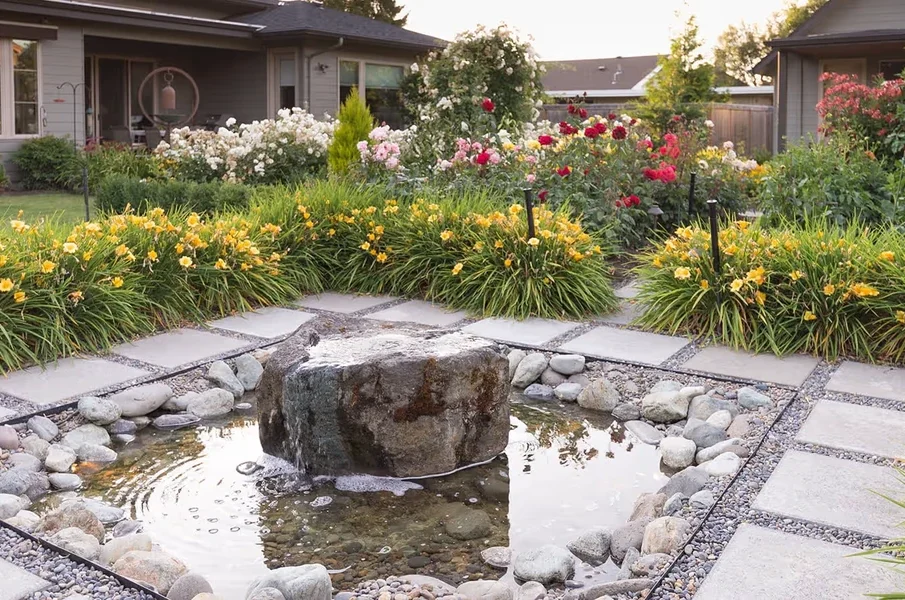
Most homeowners pick the fountain before they pick the pump. I have watched a dozen projects go sideways for exactly that reason. You fall for a photo of a stacked basalt spillway on Pinterest, order the kit, and then discover your yard has two problems nobody warned you about: a water table that sits high enough to turn any hole into a bathtub, and salt air that will chew through the wrong finish in a single season.
Here is the promise. By the end of this piece you will know which decisions actually matter, which ones are cosmetic, and how to sequence the work so you are not paying twice. You will also know why so many water features in this city end up switched off and green by month eight.
The bucket test that saves you money before anyone quotes you
Before a contractor sets foot on your property, do one thing. Dig a hole roughly the size and depth of the basin you have in mind and leave it open for 24 hours. If it fills past halfway, you are looking at a lined or raised build. That single afternoon tells you more about your budget than any consultation will.
Why does it matter so much? Because South Florida sits on a shallow, fast-recharging aquifer, and the ground stays saturated through the wet season. According to the National Oceanic and Atmospheric Administration, our region gets a large share of its annual rainfall packed into a handful of summer months, which means your soil is often closer to a sponge than a foundation. A pond that would be simple in Georgia becomes an engineering problem here.
Homeowners routinely skip this step. Then they sign off on a design that assumes a dry excavation, and the crew spends the first week bailing instead of building. That cost shows up later under “site conditions” on your invoice.
Moving water in a place with no natural grade
Miami is flat. Genuinely, stubbornly flat. If you want a stream that runs rather than a puddle that sits, the elevation has to be built, not found. That usually means a berm, a raised wall, or both, and it means the pump has to push water uphill against gravity while fighting friction from every elbow in the pipe run.
This is where most DIY kits quietly fail. A pump rated at a generous flow rate at zero height will deliver a fraction of that once you add three feet of lift and twenty feet of hose. You get a dribble. You assume the pump is defective. It is not; it is doing exactly what physics says it should.
The fix is boring and cheap: buy the pump last, after the drop is measured. Size it for the total lift plus pipe friction, then add a margin. And put it somewhere you can reach without draining the whole basin, because you will be cleaning an impeller more often than you think. Leaf litter from a single ficus can clog an intake screen in a matter of days.
What I would choose if it were my yard
A single spillway basin over a multi-tier cascade, every time. Fewer joints, fewer leaks, less pump strain, and far less maintenance. Cascades photograph beautifully and behave badly. If you want the look of a long run, get it with a wide, shallow rill that moves water slowly rather than a tall fall that needs serious head pressure. Your future self will thank you at 7 a.m. on a Sunday when you are fishing a mango out of the intake.
Pumps, filters, and the electricity bill nobody mentions
Circulation pumps are the one component that runs continuously, and continuous draw adds up. The U.S. Department of Energy publishes guidance on pump efficiency and variable-speed motors for exactly this reason. A variable-speed pump costs more upfront and less every month after, because you can run it slow for filtration and crank it only when you are actually sitting outside.
Pair that with a mechanical skimmer and a biological filter stage, and you cut the amount of chemical intervention you need later. Not eliminated. Reduced. Anyone promising you a maintenance-free pond is selling you something.
The other quiet expense is top-off water. Miami’s evaporation rate is brutal in April and May, and a shallow basin can lose noticeable depth in a week. Either plumb an auto-fill line with a float valve, or accept that you will be standing there with a hose. I have done both, and the auto-fill wins by a wide margin.
Salt air, sun, and materials that survive here
Every material decision in coastal Florida gets made twice: once for how it looks, and once for how it ages. Natural stone holds up far better than cast concrete, which spalls and stains. Dark finishes absorb heat, encourage algae, and fade. Copper and brass patina beautifully and then turn your water green if you are not careful about composition.
If you are within a few miles of the coast, remember that salt aerosol settles on every surface and works its way into pumps, lights, and fittings. Stainless components graded for marine exposure cost a little more and last considerably longer. Concrete sealers need reapplying more often here than the label suggests because of the UV load. The Environmental Protection Agency maintains resources on water quality and runoff, which is worth a look if your feature will discharge anywhere near a storm drain or a canal.
And plan for wildlife, because you are going to get it. Herons, iguanas, raccoons, and the occasional very determined duck all treat a pond as a resource. Rock ledges, depth changes, and a section of planted margin give fish somewhere to hide and give you a feature that reads as natural instead of as a bathtub with a statue in it.
A sequence that keeps you out of trouble
- Run the hole test and note your water table.
- Decide the feature type, then measure the lift and pipe run.
- Call about permits and any HOA or setback rules before ordering anything. Miami-Dade has local requirements that vary by parcel and by municipality, and they are not uniform across the county.
- Choose materials for aging, not for the showroom.
- Size the pump last, with margin.
- Build in access to the pump, filter, and any lighting transformer.
- Set a maintenance rhythm before the water goes in.
Steps six and seven are the ones people skip, and they are the ones that decide whether the thing still runs in year three. If you would rather hand the whole sequence to someone who has already made these mistakes on a hundred properties, professional water feature installation in Miami covers the design, the permitting questions, and the build in one pass. That route costs more up front and usually costs less over the life of the feature, because the water table problem gets solved on paper instead of in your yard.
My honest take: if your heart is set on a cascade, build a small one first. Live with the sound for a season. You will learn more about what you actually want in three months of listening than in three hours of scrolling.