How Residential AC Services Improve Energy Efficiency With Modern HVAC Technology
A comfortable home should not require an air conditioner to work harder than necessary. Modern HVAC technology helps homeowners maintain steady indoor temperatures while using electricity wisely. The right equipment, careful installation, and timely service can turn cooling performance into measurable household efficiency.
Energy efficiency starts with more than an equipment label. Residential air conditioning services can identify performance issues, match equipment to the home, and keep essential components operating within their intended range. Poor airflow, incorrect refrigerant levels, worn parts, or an aging system can increase runtime and utility costs. Here, you’ll know how AC services improve energy efficiency with modern HVAC technologies.
Matches Equipment to the Home
A properly sized cooling system can deliver dependable comfort without excessive cycling or prolonged operation. Professional technicians can assess square footage, insulation, duct condition, household usage, and existing equipment before recommending replacement. This evaluation helps homeowners choose capacity and efficiency features suited to their cooling demands. The Department of Energy reports that, in a Southeast example, a 23.5 SEER2 central AC used about 5,222 kWh annually, compared with 9,159 kWh for a less-efficient 13.4 SEER2 model under its stated assumptions. The comparison shows why efficiency ratings matter when an older unit reaches replacement age.
Improves Airflow and Refrigerant Performance
Efficient cooling depends on balanced airflow and correct refrigerant charge. A restricted filter, dirty coil, or duct problem can force equipment to work harder while rooms remain uncomfortable.
Professional service can focus on these checks below, experts:
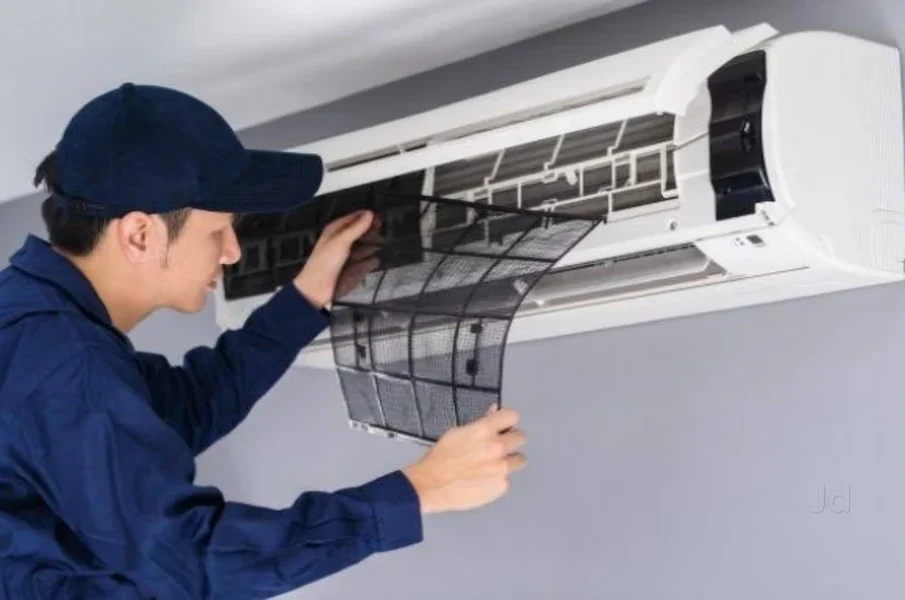
- Inspect filters, coils, blower components, and airflow paths.
- Check refrigerant levels and cooling conditions.
- Examine electrical connections, controls, drainage, and operating cycles.
- Test the system after service.
ENERGY STAR notes that airflow problems can reduce system efficiency by up to 15 percent, making airflow assessment important during routine care.
Puts Smart Controls to Work
Modern thermostats give households greater control over cooling schedules and temperature settings. Programmable or connected controls can reduce unnecessary runtime when rooms are vacant and maintain preferred temperatures when occupants return. Thermostat placement also matters because nearby heat sources can cause inaccurate readings and longer cycles. Variable-speed equipment can provide another efficiency advantage. Compatible systems can adjust operation to changing demand, supporting steadier temperatures and lower energy use.
Treat Maintenance as Energy Care
Routine inspections can preserve the efficiency gains built into newer HVAC equipment. Seasonal appointments let technicians examine coils, filters, electrical connections, refrigerant charge, drains, controls, and airflow before heavy cooling demand arrives.
Homeowners can support that work with simple habits:
- Check the air filter monthly and replace or clean it as required.
- Keep outdoor equipment clear of leaves, grass, and debris.
- Watch for weak airflow, uneven temperatures, unusual sounds, or frequent cycling.
- Arrange prompt service when cooling performance changes noticeably.
These steps can reduce strain while supporting equipment longevity and comfort.
Repairs Problems Before Efficiency Falls
A rising utility bill can sometimes signal a mechanical problem rather than higher household usage alone. Strange noises, poor cooling, repeated cycling, unusual odors, or moisture deserve professional attention before a minor fault grows. Residential air conditioning services can diagnose the cause and determine if repair, adjustment, or replacement makes greater financial sense.
A well-maintained system delivers predictable cooling with less wasted energy. Accurate sizing, smart controls, and responsive repairs create a practical efficiency strategy. Modern HVAC technology works best when expert service keeps each component working together.
Efficient cooling starts with the right equipment and continues through attentive care. Professional HVAC service can protect comfort while keeping unnecessary energy use in check.
Thoughtful maintenance helps homeowners gain lasting value.